





Phantom Kin: A Mutual Metamorhosis
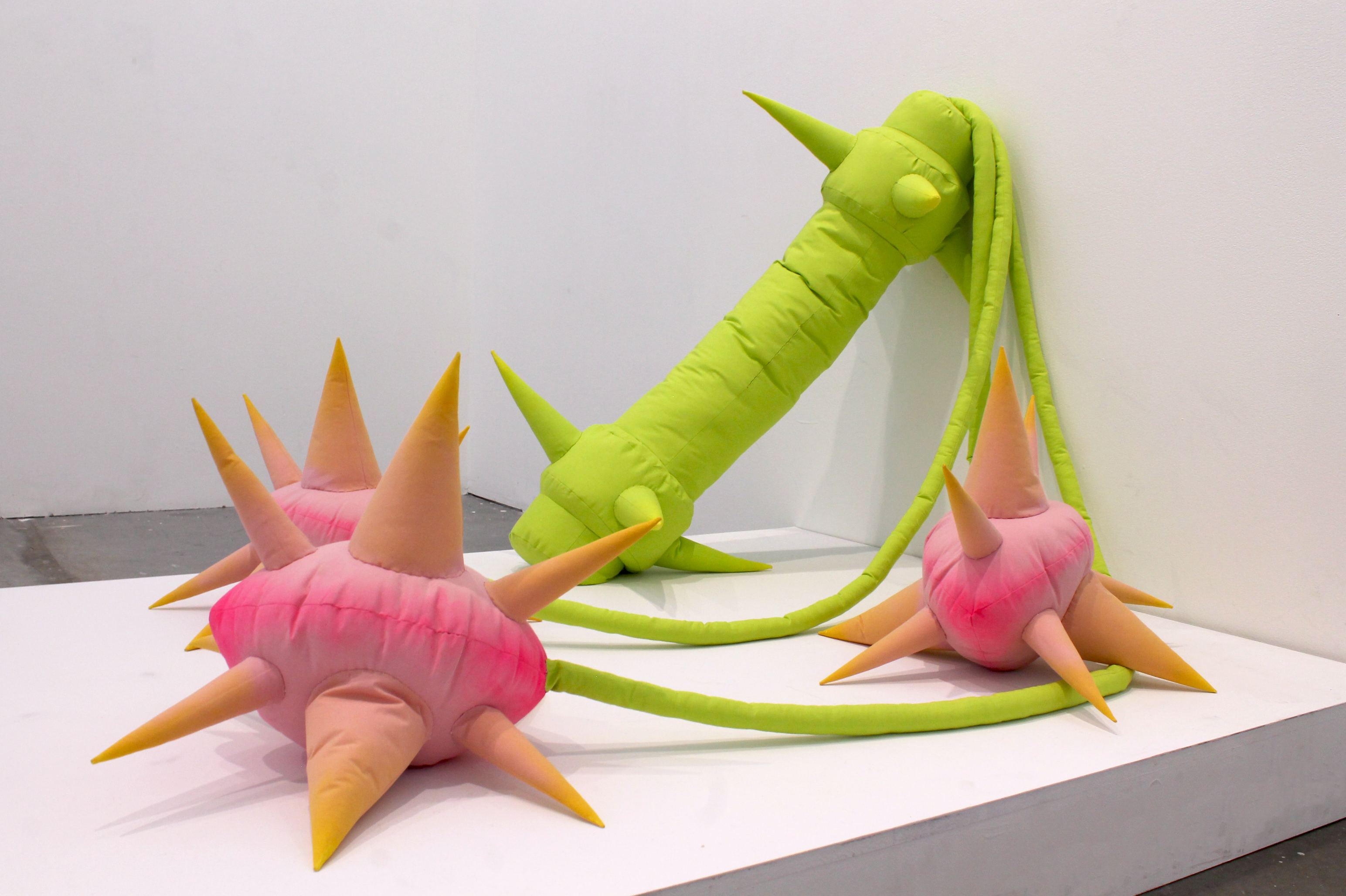
Installed at The Bows, Calgary, AB.
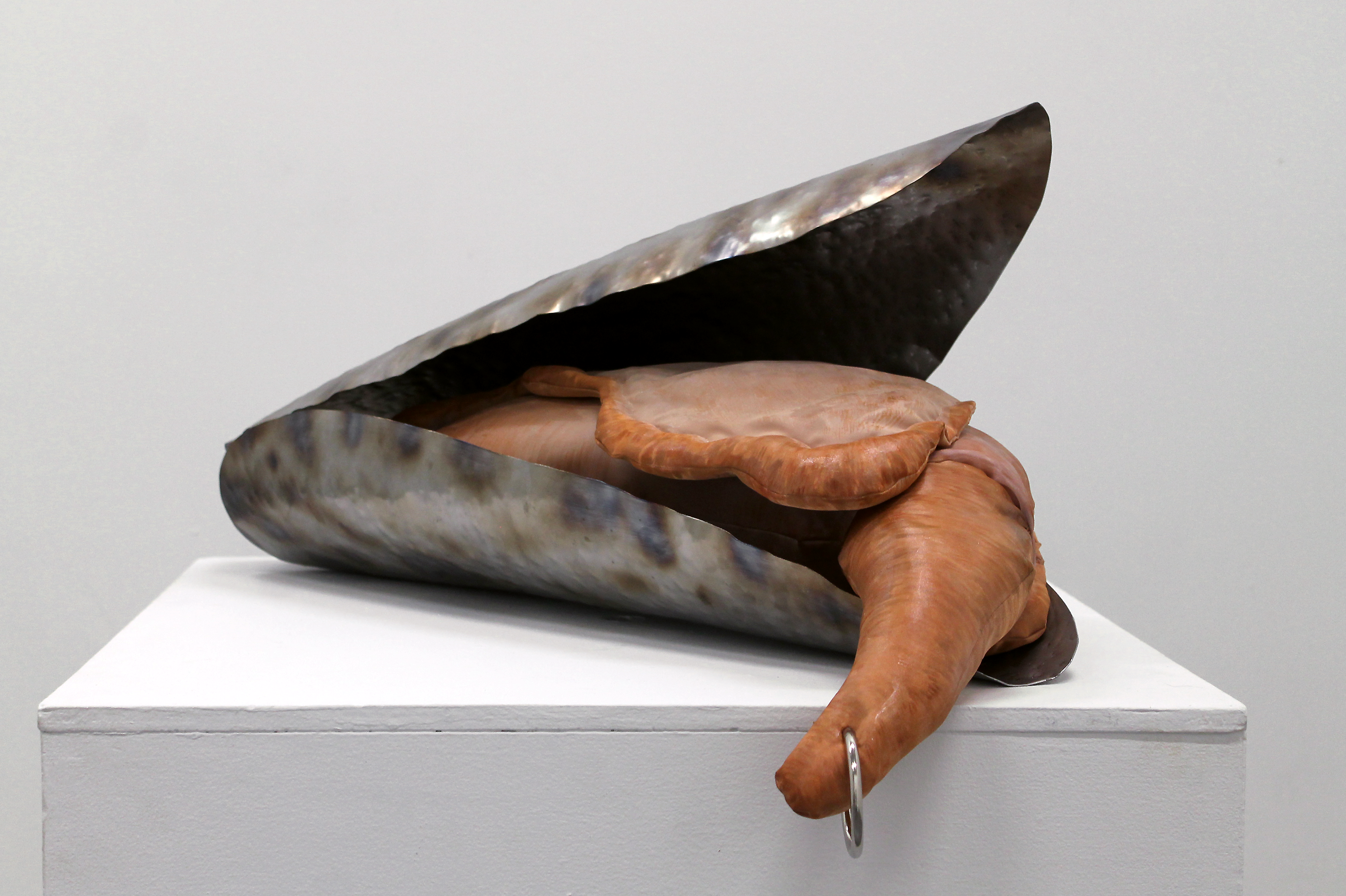
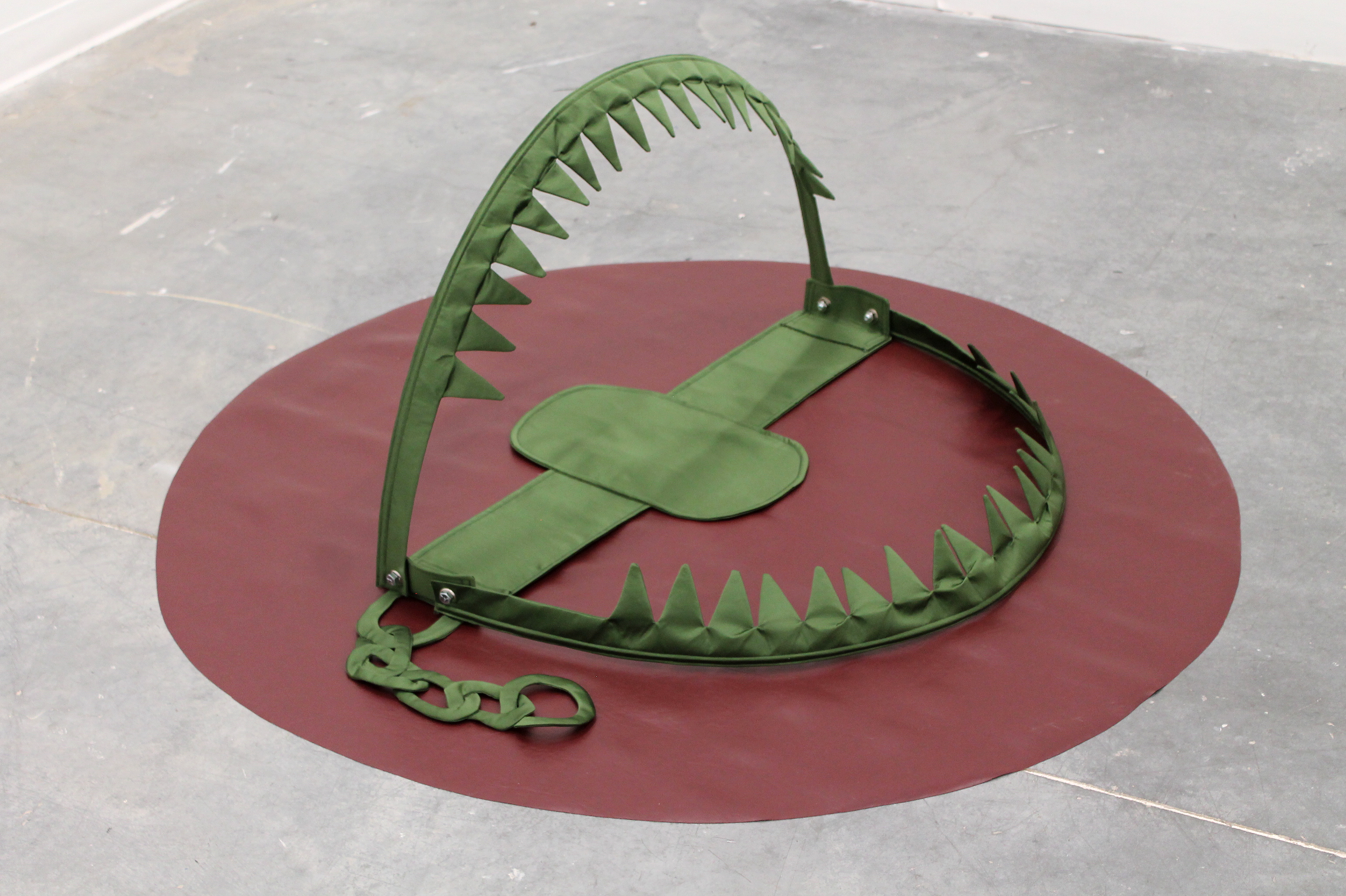
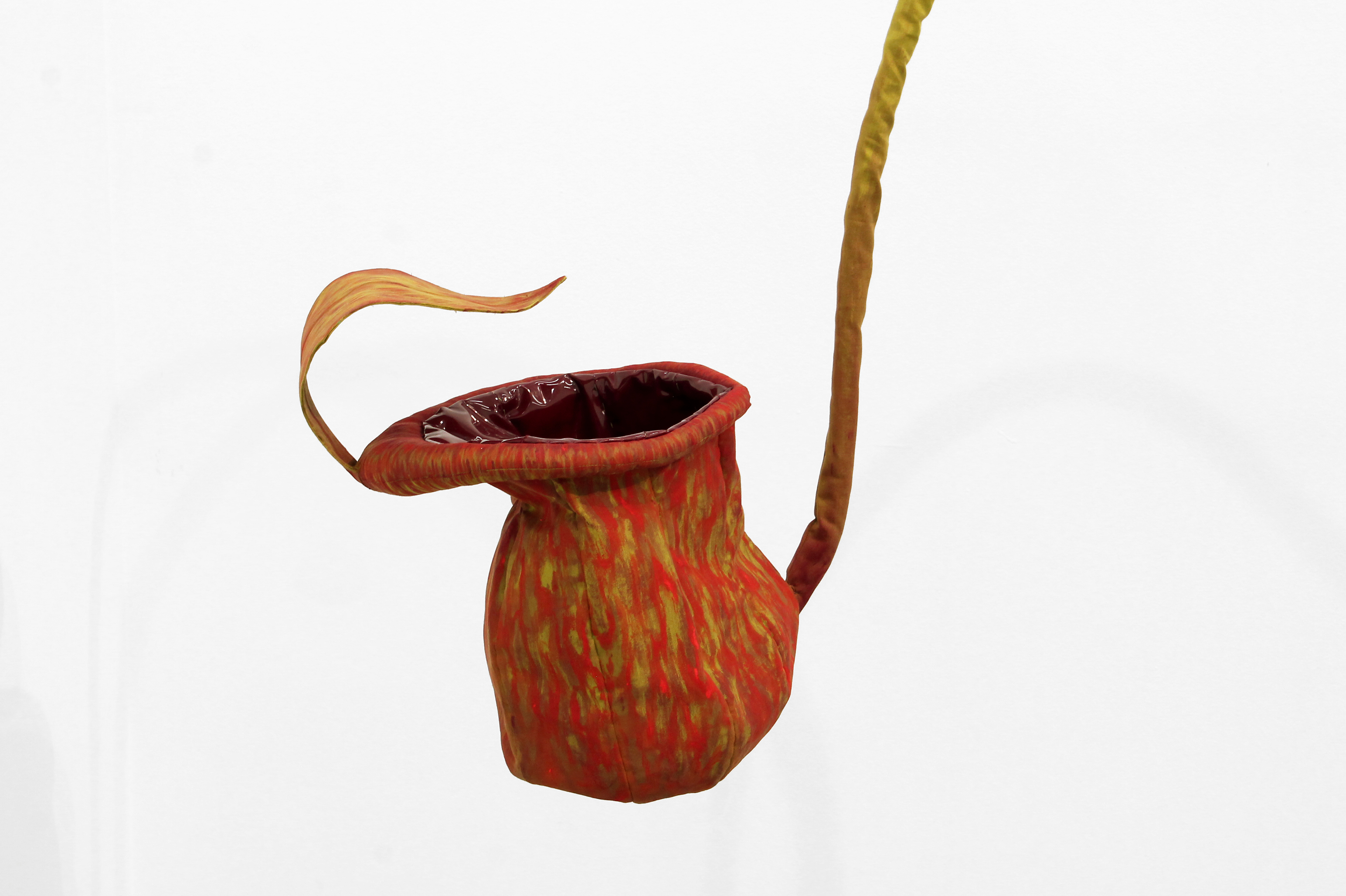
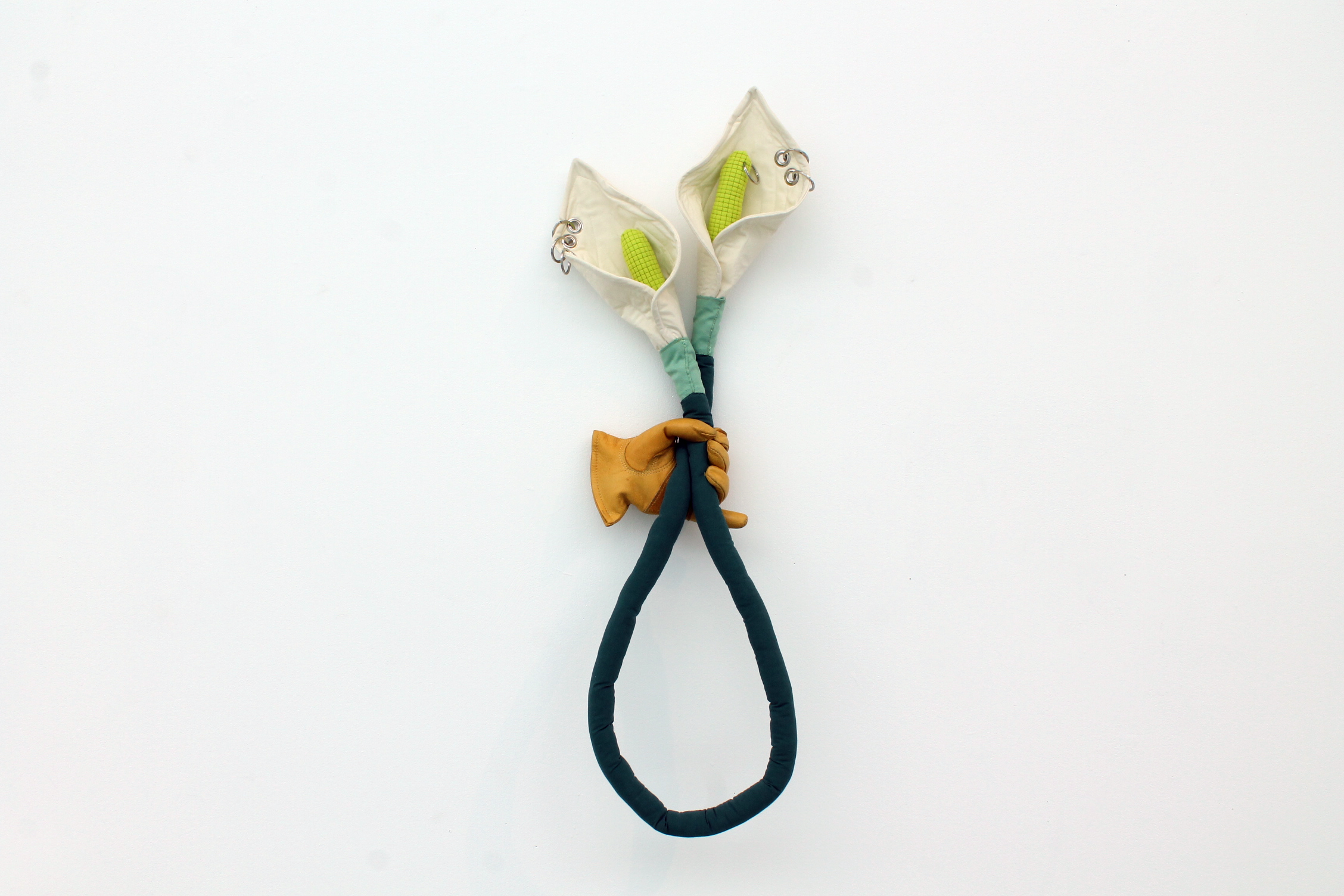
Phantom Kin: A Mutual Metamorphosis draws on insect ecologies to reconsider definitions of the “natural”. Large-scale textile sculpture, sound, and text explore biomimicry as a natural survival tactic and a queer strategy, resisting rigid classification and destabilizing dominant paradigms. These pieces illustrate the importance of community and adaptability as integral components of resilience through adverse circumstances.
Insects are central protagonists within this body of work; their resilience lies in their capacity for transformation, collective intelligence, and reciprocal adaptation with their environments. Their survival is not rooted in dominance of their environment, but fluidity with it. By positioning plant-mimicking insects as mirrors for socially marginalized communities, I investigate visibility management, coded communication, and the tension between concealment and connection in politically hostile climates.
Three large sculptural works reference insects whose camouflage strategies blur the boundary between self and environment: a leaf-mimicking phasmid which reproduces through parthenogenesis, destabilizing binary reproductive structures; an orchid mantis whose disguise lures rather than hides, complicating gendered assumptions about passivity and power; and a thorn bug whose mimicry becomes most effective in collective formation, supported by vibrational communication and mutualistic alliances with ants. These works consider “passing,” queer signalling, and the vigilant calibration of identity required for survival.
A final large-scale sculpture extends through the space, replicating a root system or nervous network. Its branching structure references decentralized forms of intelligence shared across species: vascular systems, fungal mycelium, and insect communication pathways. These networks resist singular authorship and hierarchical organization, modelling mutualistic systems in which knowledge circulates laterally. Through these biological frameworks, I question anthropocentric measures of value and cognition.
The installation expands through trailing vines and botanical forms that envelop the viewer within a lush ecosystem. A soundscape layers insect droning and chirping into a harmonic composition, attuning the body to modes of communication that exist beyond human language. The exhibition becomes an invitation to integrate with ecological relationality, rather than observe it as an outsider.
An accompanying artist’s book combines prose, painting, interview, and photographic documentation to explore how queerness has historically been positioned as “unnatural”. By examining insect behaviors that disrupt cis-normative projections onto nature, the publication reframes fluidity and androgyny as intrinsic. Extending beyond the gallery, the book invites readers to unpack cultural presumptions and reimagine kinship across species boundaries.
Throughout Phantom Kin, I consider nature as a rhizomatic web of constant metamorphosis. The natural world is adaptive, improvisational, and defiantly diverse. By aligning queer embodiment with insect modes of being, I resist the weaponization of “nature” against those who diverge from dominant social structures. Instead, I propose that queerness is embedded within ecological systems as a natural form of existence.
This body of work champions even the smallest and most overlooked beings, asking what forms of community we might build through embracing interdependence over hierarchy. Insects teach us that survival is collaborative, intelligence is distributed, and transformation is ongoing. Through softness and sensory immersion, Phantom Kin invites viewers to inhabit a worldview in which mutual metamorphosis becomes a collective practice.
The exhibition features a Soundscape by Katherine Hillson, aka Sainerine, and has an accompanying Artist’s Book co-authored with Violetta Leigh.
Artist’s book available here
Installed at The Bows, Calgary, AB.
Phantom Kin: A Mutual Metamorphosis draws on insect ecologies to reconsider definitions of the “natural”. Large-scale textile sculpture, sound, and text explore biomimicry as a natural survival tactic and a queer strategy, resisting rigid classification and destabilizing dominant paradigms. These pieces illustrate the importance of community and adaptability as integral components of resilience through adverse circumstances.
Insects are central protagonists within this body of work; their resilience lies in their capacity for transformation, collective intelligence, and reciprocal adaptation with their environments. Their survival is not rooted in dominance of their environment, but fluidity with it. By positioning plant-mimicking insects as mirrors for socially marginalized communities, I investigate visibility management, coded communication, and the tension between concealment and connection in politically hostile climates.
Three large sculptural works reference insects whose camouflage strategies blur the boundary between self and environment: a leaf-mimicking phasmid which reproduces through parthenogenesis, destabilizing binary reproductive structures; an orchid mantis whose disguise lures rather than hides, complicating gendered assumptions about passivity and power; and a thorn bug whose mimicry becomes most effective in collective formation, supported by vibrational communication and mutualistic alliances with ants. These works consider “passing,” queer signalling, and the vigilant calibration of identity required for survival.
A final large-scale sculpture extends through the space, replicating a root system or nervous network. Its branching structure references decentralized forms of intelligence shared across species: vascular systems, fungal mycelium, and insect communication pathways. These networks resist singular authorship and hierarchical organization, modelling mutualistic systems in which knowledge circulates laterally. Through these biological frameworks, I question anthropocentric measures of value and cognition.
The installation expands through trailing vines and botanical forms that envelop the viewer within a lush ecosystem. A soundscape layers insect droning and chirping into a harmonic composition, attuning the body to modes of communication that exist beyond human language. The exhibition becomes an invitation to integrate with ecological relationality, rather than observe it as an outsider.
An accompanying artist’s book combines prose, painting, interview, and photographic documentation to explore how queerness has historically been positioned as “unnatural”. By examining insect behaviors that disrupt cis-normative projections onto nature, the publication reframes fluidity and androgyny as intrinsic. Extending beyond the gallery, the book invites readers to unpack cultural presumptions and reimagine kinship across species boundaries.
Throughout Phantom Kin, I consider nature as a rhizomatic web of constant metamorphosis. The natural world is adaptive, improvisational, and defiantly diverse. By aligning queer embodiment with insect modes of being, I resist the weaponization of “nature” against those who diverge from dominant social structures. Instead, I propose that queerness is embedded within ecological systems as a natural form of existence.
This body of work champions even the smallest and most overlooked beings, asking what forms of community we might build through embracing interdependence over hierarchy. Insects teach us that survival is collaborative, intelligence is distributed, and transformation is ongoing. Through softness and sensory immersion, Phantom Kin invites viewers to inhabit a worldview in which mutual metamorphosis becomes a collective practice.
The exhibition features a Soundscape by Katherine Hillson, aka Sainerine, and has an accompanying Artist’s Book co-authored with Violetta Leigh.
Artist’s book available here


documentation by Khrysta Lloren and Cy Yang-Smith